Health Studies · Type 2 Diabetes
Why 12,847 People With Type 2 Diabetes Are Claiming This "Sugar Sponge" Routine Helped Lower Their Blood Sugar Naturally
A simple morning ritual is changing how thousands manage their condition — and it has nothing to do with cutting carbs or taking more pills.

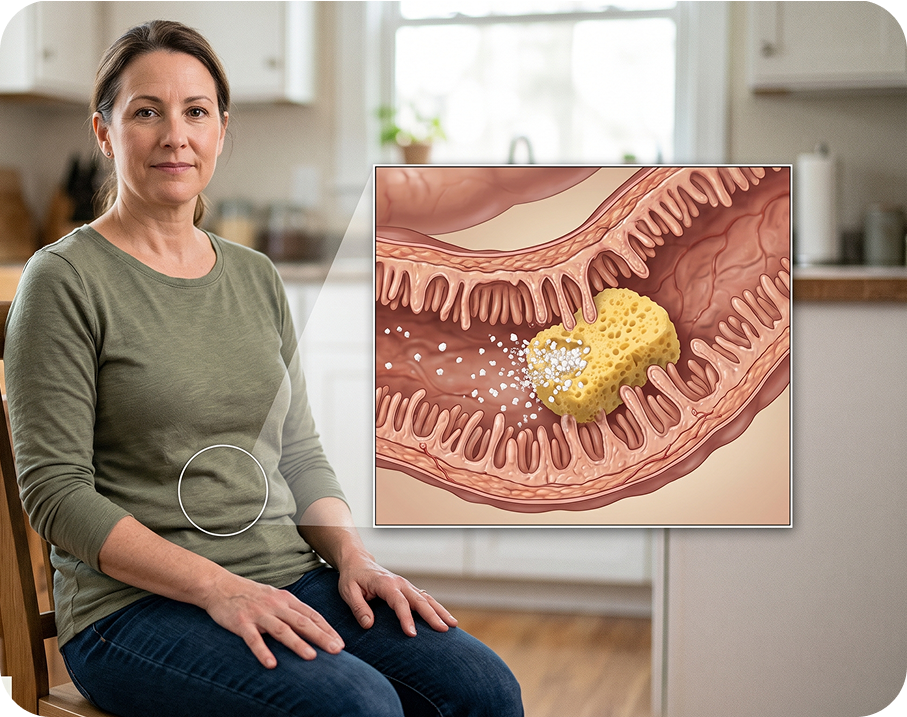
For decades, people with Type 2 diabetes have been told the same thing: cut sugar, take your medication, exercise more. But a growing number of patients say none of it ever worked the way they hoped. Now, a simple at-home routine — quietly spreading through online support groups — is reshaping how thousands of them think about their condition.
The routine, nicknamed the "Sugar Sponge" by the community using it, was first popularized by Brazilian physician Dr. Rafael Soren, who spent over a decade studying why so many of his patients hit a wall despite following every rule in the book.
What he discovered surprised even him: the problem may not be the sugar his patients were eating — but the sugar their bodies had already absorbed.
1The "wall" most diabetics never see coming
If you have diabetes, you already know the pattern. You eat well for a week, your blood sugar dips a little, then it climbs right back up. You add a medication, it works for a while, then your doctor doubles the dose. Then you add another. You try cinnamon, apple cider vinegar, the latest "diabetes diet," and yet — your fasting numbers refuse to stay below 130.
"Most people aren't failing because they're lazy," Soren writes in his published guide. "They're failing because nobody told them what was actually happening inside their body."
2What the "Sugar Sponge" actually means
Picture a kitchen sponge sitting in a sink, slowly absorbing water until it's completely saturated. According to Soren's research, something similar happens to the human body when glucose stays elevated for years at a time.
Tissues, blood vessels, the liver, and the muscles begin to "soak up" glucose they can no longer process efficiently. This buildup, he argues, is what makes blood sugar increasingly resistant to control — even when patients do everything by the book.

Conventional treatments, Soren says, often focus on managing the incoming sugar — through diet and medication — while ignoring the excess that's already saturated the system. "It's like trying to dry the floor while the sponge keeps leaking," he writes.
3How the routine works
Unlike a diet, the Sugar Sponge isn't about restriction. It's a structured morning protocol — combining a specific sequence of natural ingredients with two small adjustments around meals — designed to help the body release and process its stored glucose more efficiently.
According to Soren, the routine targets four areas:
- Bloodstream: reducing the day-to-day spikes after meals.
- Cellular response: helping cells reopen to insulin signals.
- Organ load: easing the chronic stress placed on the liver and pancreas.
- Inflammation: dampening the silent inflammation many specialists now link to insulin resistance.
The whole routine, he claims, takes less than 7 minutes a day and uses ingredients available at any grocery store.
4The signs your body is already saturated
Soren outlines four warning signs his patients reported long before they realized what was happening:
Stubborn fasting glucose
Numbers that refuse to come down no matter how careful the diet.
Afternoon energy crashes
An exhaustion that hits between 2 and 4 p.m., no matter how well you slept.
Tingling or numbness
Subtle sensations in fingers, feet, or legs — often dismissed as "just getting older."
Medication creep
Needing a higher dose every few months, even when nothing in your routine changed.
"If three or more of those sound familiar," Soren says, "your body is probably trying to tell you it's been overloaded for a long time."
5Real results from people using the routine
Health Daily reviewed dozens of submitted testimonials and spoke with three users by phone. Their stories were strikingly consistent: people described not a miracle, but a slow, steady return of control they hadn't felt in years.

"My A1C dropped from 9.2 to 6.8 in four months. My endocrinologist took me off one of my two medications at my last visit. I sat in the parking lot afterwards and cried."
3 weeks ago · 124 found this helpful

"Type 2 for 17 years. I've tried every diet and supplement out there. Started the morning routine in February and by April my fasting was consistently under 115. I still don't fully understand why it works — but it does."
1 month ago · 89 found this helpful

"Honestly I was skeptical of the price — figured if it was only $17 it had to be junk. It's not. It's the first thing in 15 years that's helped me without making me feel deprived. I just wish I'd found it sooner."
2 weeks ago · 76 found this helpful

"I'm on the road five days a week. The routine works even from a truck stop or a hotel room — that alone was worth it. My fasting dropped 38 points in three weeks and I haven't had a 3 p.m. crash since."
5 weeks ago · 61 found this helpful

"As a nurse, I'm trained to be cautious of marketing language. But the actual protocol is sensible — nothing dangerous, no ingredients that interact poorly with common meds. I've quietly recommended it to two long-term patients."
3 weeks ago · 142 found this helpful

"Don't expect a miracle in 3 days. Took me about 5 weeks to see real movement. But once it kicked in, it stuck. Down 16 lbs and my doctor halved my Metformin. Knocked off a star because the recipe section needed more variety."
2 months ago · 53 found this helpful
6How to get access to the routine
After our story went viral on social media in early 2026, Dr. Soren's publisher released a digital edition of his complete protocol to make it accessible to readers worldwide. The guide is being offered at a heavily discounted launch price during this awareness campaign.

What's inside the guide:
- The full Sugar Sponge morning routine, step by step
- Practical recipes and ingredient swaps for everyday meals
- The two-meal adjustment to prevent post-meal spikes
- A simplified food guide for the first 30 days
- Instant access via PDF and WhatsApp
Editorial disclosure: Health Daily may receive a small commission if you purchase through links in this article. This does not affect the price you pay, and our editorial team operates independently from our advertising partners. Always consult your physician before changing any medication or treatment.
147 Comments
Sarah Mitchell Editor ·
Hi everyone — Sarah here. We've received hundreds of questions about whether this routine is safe to combine with existing medication. Dr. Soren is explicit in the guide: do not stop any prescribed medication. The routine is meant as a complementary support, and any changes to your prescription should always go through your physician. Stay safe out there.
Linda Hartmann ·
Type 2 for 14 years. Honestly thought I'd tried everything — keto, intermittent fasting, three different supplements that promised the world. Started the morning routine 3 weeks ago. Fasting glucose this morning was 108 for the first time in years. I literally cried at the kitchen table.
Maria K. ·
Linda — same here. Five weeks in, fasting down 22 points. The 2 p.m. crash is what shocked me most — completely gone.
Daniel Rivers ·
I want to believe but this reads like every other supplement ad I've seen. What's actually in the morning routine? Hard to evaluate without knowing the ingredients.
Sarah Mitchell Editor ·
Fair question, Daniel. The full ingredient breakdown (with ratios) is the paid portion of the guide — that's how Dr. Soren funds his continued research. What I can tell you: nothing in it is pharmaceutical, nothing requires a prescription, and everything can be found at a standard grocery store. The guide also lists the foods to avoid combining it with.
Heather Pemberton ·
My mom had Type 2 and lost her foot to it. I was diagnosed last year at 41 and was absolutely terrified — I kept seeing her life when I looked at mine. Started the routine 8 weeks ago. A1C went from 8.4 to 6.7. I still wake up surprised that I'm not afraid every day anymore.
Robert Vance ·
Look, I've wasted hundreds on diabetes supplements over the years and most of them did absolutely nothing. Almost didn't click on this. But $17 is less than a co-pay and there's a refund window. Just bought it. Will come back in a month and report honestly.
Dan Mercer, PharmD ·
I work in a pharmacy. The "medication creep" this article describes is exactly what we see daily — same patient, same prescription, dose bumping up every 6 months. We rarely have time to explain why. Glad someone is finally writing about the underlying mechanism.
Mark Whitaker ·
I'll wait until there's a peer-reviewed controlled study before I trust any of this. Anecdotal reviews don't move the needle for me.
Theresa Buchanan ·
Mark, completely fair. But some of us don't have time to wait for studies — my A1C was climbing every quarter. Tried it 6 weeks ago and have my labs back from this morning to show for it. Sometimes you have to try things in your own life.